Perspectives on Healthcare Infrastructure, Governance, and Capital Markets.
Baraka Insights
Explore the purpose of the platform, the people behind its work, and the subjects that shape its research and commentary.
Explore Library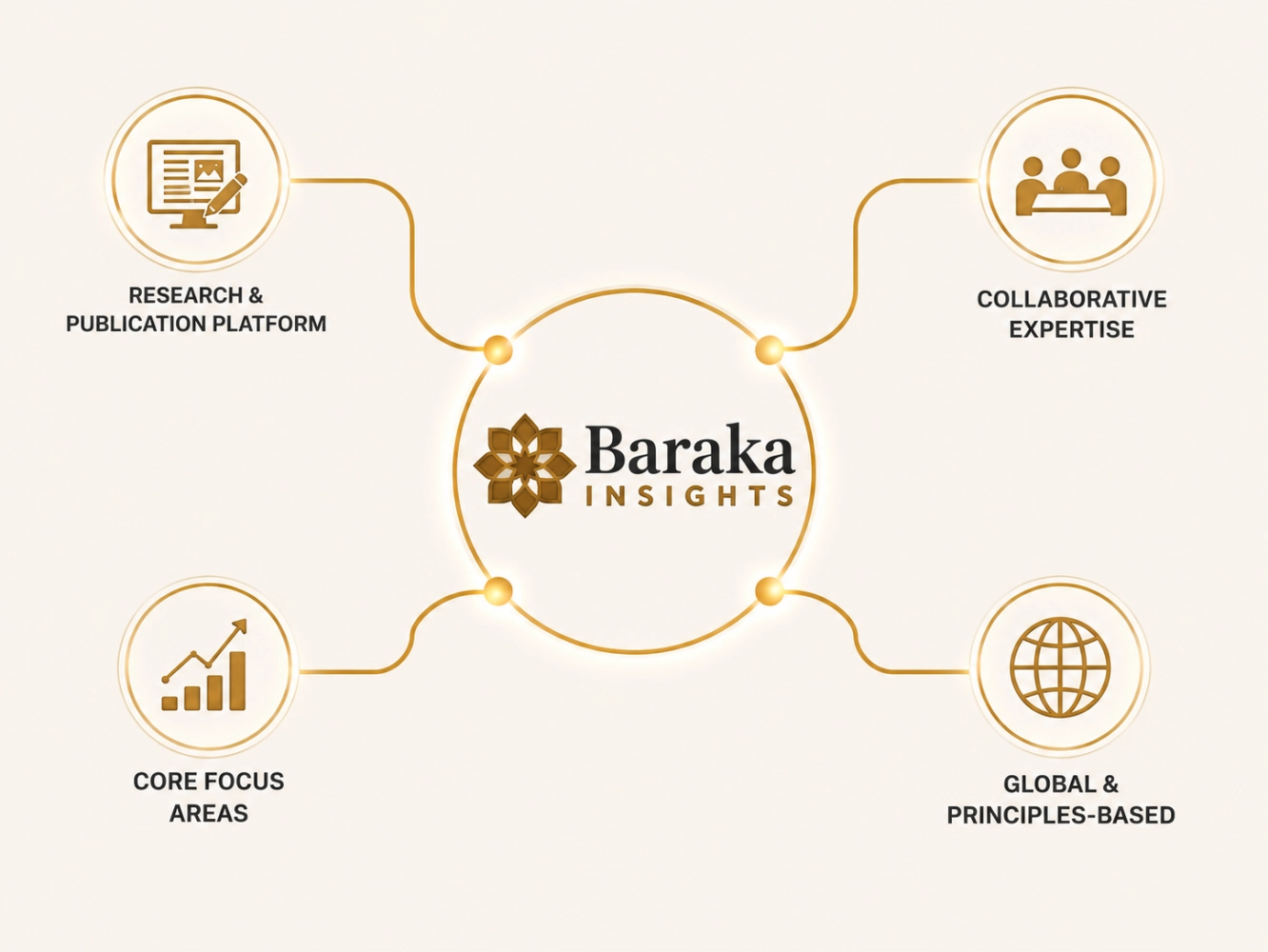


Explore Baraka Insights by Audience

Fund-specific analysis, governance frameworks, and capital markets research curated for institutional and accredited investors.

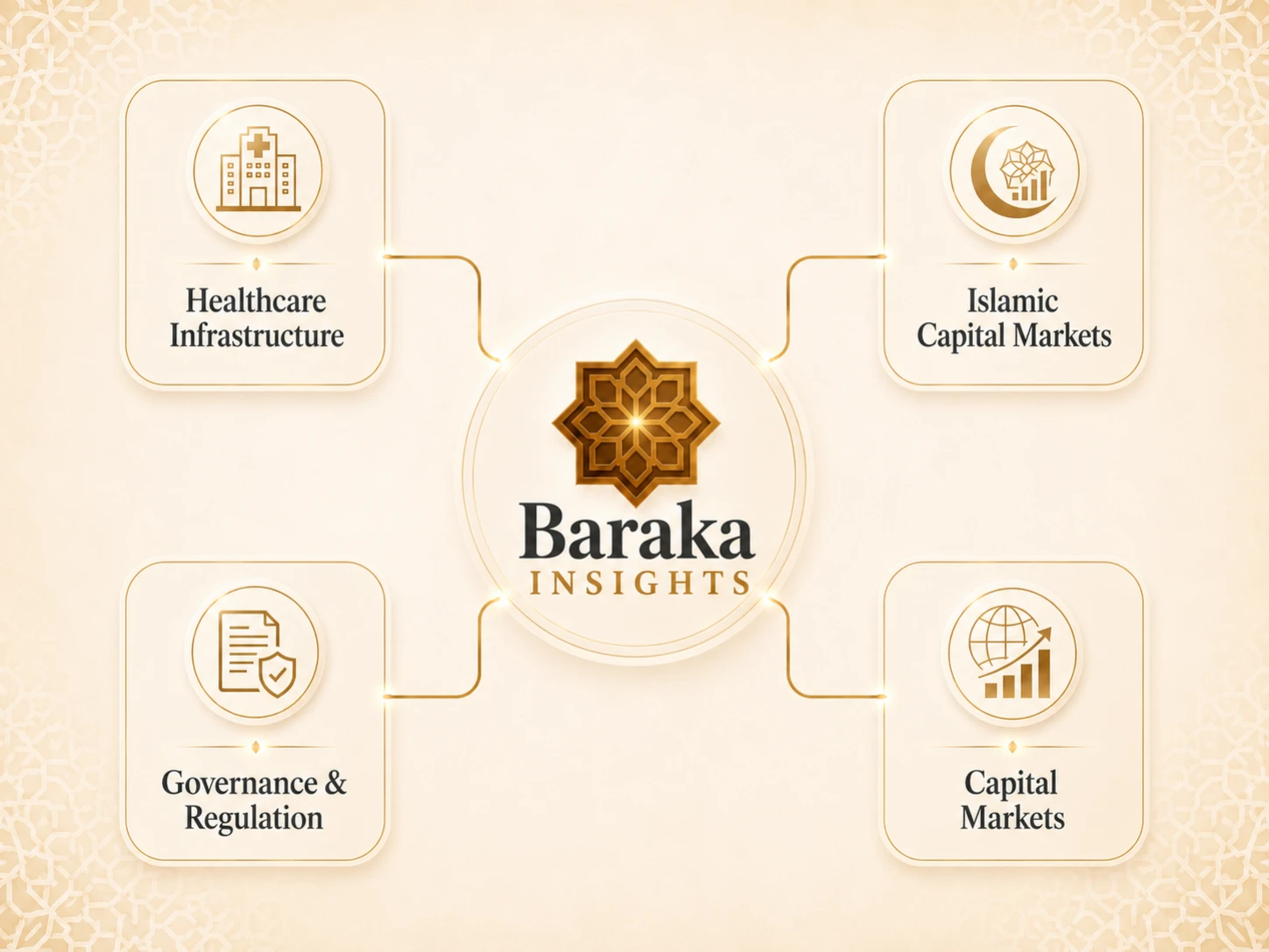
Analysis and perspectives on healthcare systems, infrastructure development, and the evolving relationship between clinical practice and capital.

Research papers, working studies, and governance analysis addressing Islamic finance, healthcare policy, and global capital markets.
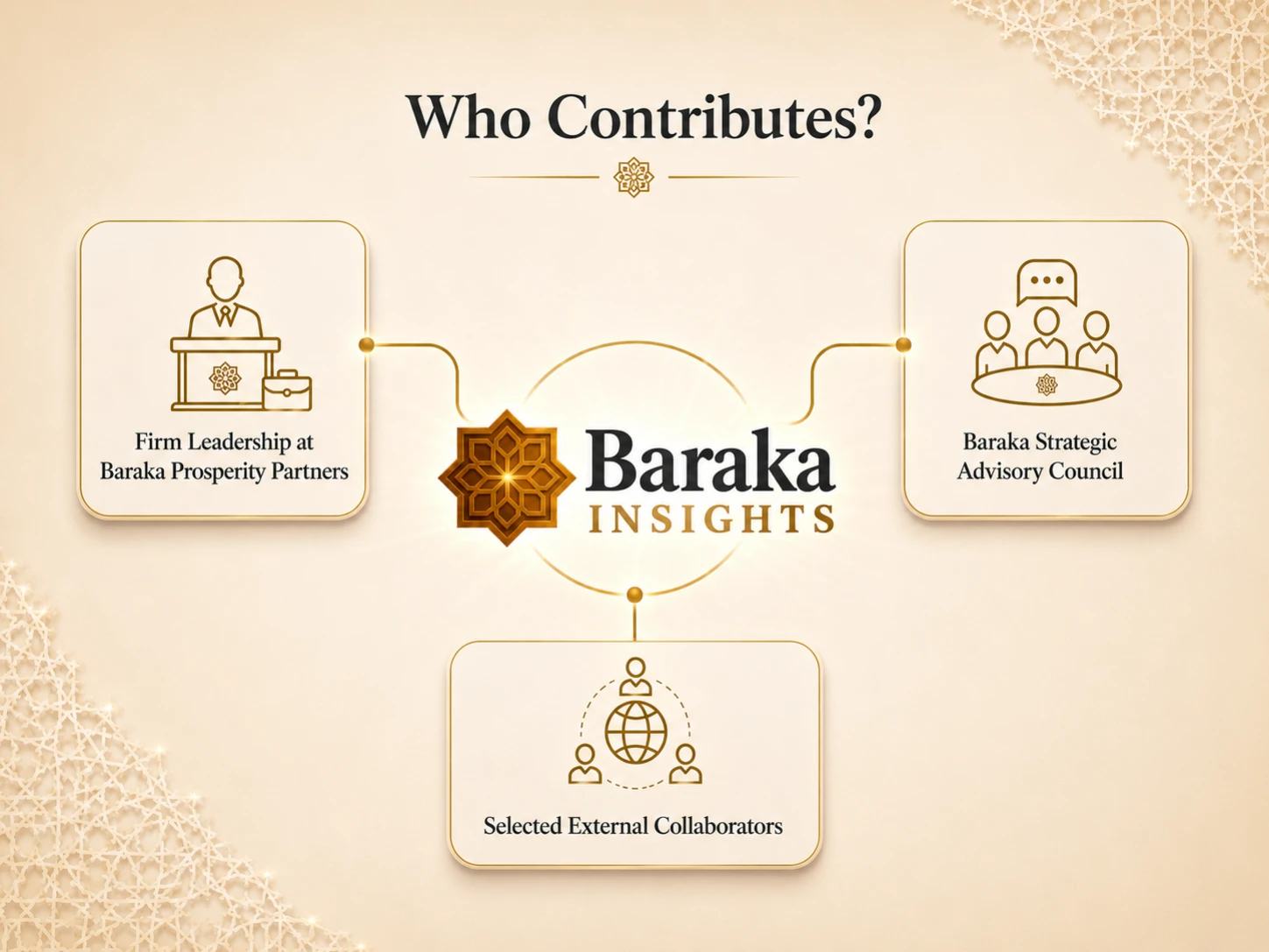
Strategic Advisory Council

Islamic finance manages an estimated $4 trillion in global assets and has demonstrated its capacity to exist and scale across sovereign sukuk markets, takaful operators, and Shariah-compliant private equity platforms spanning three continents. What it has not demonstrated — at any level of the system — is that it can serve as the structural backbone of health financing for the 2 billion people in whose name it was built. This paper, the second in a series, proposes a mechanism. Part I diagnosed the gap between Islamic capital accumulation and Muslim-majority health system underinvestment. Part II advances a governance and capital architecture to close it: a six-component PPP framework that the private sector can build unilaterally, before approaching any government counterpart. The central argument is that a platform which does so changes the terms on which governments are invited to participate — from trust in intention to ratification of demonstrated capability.
Islamic finance manages an estimated $4 trillion in global assets and has demonstrated its capacity to exist and scale across sovereign sukuk markets, takaful operators, and Shariah-compliant private equity platforms spanning three continents. What it has not demonstrated — at any level of the system — is that it can serve as the structural backbone of health financing for the 2 billion people in whose name it was built. This paper, the second in a series, proposes a mechanism. Part I diagnosed the gap between Islamic capital accumulation and Muslim-majority health system underinvestment. Part II advances a governance and capital architecture to close it: a six-component PPP framework that the private sector can build unilaterally, before approaching any government counterpart. The central argument is that a platform which does so changes the terms on which governments are invited to participate — from trust in intention to ratification of demonstrated capability.
Islamic finance manages an estimated $4 trillion in global assets, with sukuk markets spanning from Kuala Lumpur to London and takaful operators serving millions of policyholders across three continents. Yet the gap between what Islamic capital has accumulated and what Muslim-majority health systems have built remains the central unresolved question of Islamic finance's maturity as an industry. This paper examines health expenditure patterns across Muslim-majority states — from petrodollar-comfortable GCC economies to fiscally constrained fragile states — and documents three structural failures that have kept Islamic finance at the margins of health system development: the absence of scale architecture, institutional separation between health ministries and Islamic finance regulators, and takaful's unrealized potential as a mass-market solution. The conveyor belt that would move Islamic capital systematically toward Islamic health infrastructure remains unbuilt — not because the instruments are inadequate, but because the will to integrate them into a coherent financing architecture has not materialized.
Latest Commentary

Register for Baraka Insights
Create your account to access research, commentary and perspectives on healthcare infrastructure, capital markets, governance and principles-based investment.